

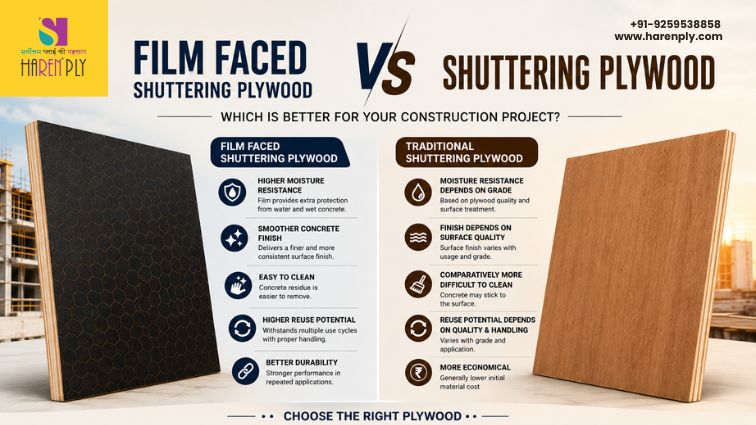
Film Faced Vs Shuttering Plywood
The quality of the shuttering material has a direct impact on the finish, precision, durability, and efficiency of concrete construction. Film faced shuttering plywood and normal shuttering plywood can both be used for making formwork, but they differ in terms of surface treatment, moisture resistance, durability, concrete finish, cleaning, and reuse potential. Understanding these differences through Haren Ply can help contractors, builders, and project owners make the right choice of plywood according to their project requirements. What Is Shuttering Plywood? Formwork or shuttering plywood is specifically manufactured for use in concrete formwork. It provides a rigid and stable surface for forming columns, beams, slabs, and other concrete structures. A good formwork plywood can provide the following advantages: Strength and rigidity Resistance to moisture during concrete work Even and consistent formwork surfaces Good load-bearing performance Easy handling and installation on site The overall performance of shuttering plywood depends on several factors, including plywood thickness, core quality, bonding strength, surface treatment, panel flatness, and manufacturing quality. What Is Film Faced Shuttering Plywood? Film Faced Shuttering Plywood is a formwork plywood with a resin-impregnated protective film bonded to its surface, typically on both sides. The main benefits of the film-faced surface include: Finer concrete finish: The smooth film surface can help produce a smoother and more consistent concrete finish when the panels are properly installed and maintained. Moisture protection: The film provides additional surface protection against moisture and wet concrete during formwork applications. Better durability: Properly manufactured and handled panels can withstand repeated handling and multiple reuse cycles. Easy cleaning: Concrete residues are generally easier to clean from the coated surface. Higher reuse potential: Film-faced panels can offer better reuse potential than conventional shuttering plywood, depending on panel quality, application, handling, and maintenance. Differences Between Film Faced Vs Traditional Shuttering Plywood Features Film Faced Shuttering Plywood Traditional Shuttering Plywood Surface Resin film coated Usually untreated or differently treated Moisture resistance Higher surface protection due to the film Depends on plywood grade, bonding, and surface treatment Concrete finish Generally smoother and more consistent Depends on surface quality and application Durability Better suited for repeated formwork applications Suitable for standard applications, depending on grade and handling Cleaning Easier to clean Comparatively more difficult Reuse Potential Generally higher Depends on quality, application, and handling Initial cost Usually higher Generally more economical Which One Should You Choose? The choice between Film Faced Shuttering Plywood and traditional shuttering plywood should be based on the project’s formwork requirements rather than only on the initial purchase price. Choose Film Faced Shuttering Plywood when: The project involves repeated concrete casting and formwork cycles. A better concrete surface finish is required. Formwork will be exposed to repeated moisture and wet concrete. Contractors want to improve panel durability and reuse potential. Large-scale residential, commercial, or infrastructure construction involves repeated formwork requirements. Choose conventional shuttering plywood when: The project has limited formwork cycles. Initial material cost is a major consideration. The application does not require a specialized film-coated surface. Standard construction requirements can be met with conventional shuttering grades. How to Select a Reliable Shuttering Plywood Manufacturer? Selecting the right Shuttering Ply Manufacturers is as important as choosing the right plywood. Customers should evaluate shuttering plywood based on several important parameters, including: Core quality Uniform thickness Bond strength Surface quality Panel flatness Water resistance Film quality and adhesion, where applicable Edge quality and sealing Expected reuse potential When selecting between Shuttering Plywood Brands, do not make the decision solely on the basis of cost. A lower-cost panel may become more expensive in the long run if it requires frequent replacement, produces inconsistent concrete finishes, or loses performance after limited use. For contractors purchasing in bulk, working directly with established Shuttering Plywood Manufacturers in India can also help ensure consistency in specifications, product quality, and supply. Why Haren Ply? Haren Ply focuses on manufacturing plywood products designed to meet construction requirements in terms of quality, reliability, and performance. When considering formwork suppliers, choosing a manufacturer that maintains consistent production and quality-control standards can help support better productivity and reliable project execution. Haren Ply’s product and quality communication also emphasizes commitment to quality, manufacturing checks, durability, and product performance. Best Shuttering Plywood Manufacturer/ Brand/ Supplier – Haren Ply The use of both shuttering ply and Film Faced Shuttering Ply can be suitable for construction applications, depending on the project’s requirements. Film Faced Shuttering Ply offered by Haren Ply provides the advantages associated with a protective film surface, including improved surface protection, moisture resistance, concrete surface quality, durability, and reuse potential. For large and complex projects involving repeated formwork cycles, the higher initial investment in Film Faced Shuttering Plywood can be justified by its potential for better durability, easier cleaning, improved surface performance, and repeated use. The final choice should always be based on the project’s formwork requirements, expected number of reuse cycles, required concrete finish, moisture exposure, plywood specifications, handling practices, and overall project economics.